
Appliance recycling has a measurable environmental impact: making steel from recycled scrap takes about 59% less energy than making it from iron ore (worldsteel, 2024), and the 630 million metric tons of steel recycled globally each year prevent roughly 950 million metric tons of CO2 emissions (BIR, 2025). In Indianapolis, Indy Pickup 1111 recycles every appliance and metal item it picks up — for a flat $11.
Last updated: September 2026
“Eco-friendly” gets stamped on a lot of junk removal websites. Usually it means a donation run once a month and a dumpster the rest of the time. So skip the slogans and look at what actually happens — with numbers — when a washer, water heater, or refrigerator gets recycled instead of buried.
The short version: appliances are mostly steel, steel is the most recycled material on the planet (worldsteel, 2025), and every unit that reaches a recycler instead of a landfill saves real energy, real ore, and real emissions. The long version is below. It also happens to be the reason our whole business exists.
How Much Energy Does Appliance Recycling Save?
Steel is 100% recyclable. It can be melted down and reformed into new steel of the same quality again and again (American Iron and Steel Institute) — the dryer in your garage may contain steel that was once a car door or a filing cabinet. Since 1900, the global steel industry has recycled over 25 billion metric tons of it (worldsteel, 2025).
The energy math is where recycling earns its keep:
- About 59% less energy. Making steel from scrap in an electric arc furnace took 9.84 gigajoules per metric ton in 2024, versus 23.88 for the ore-based blast furnace route — roughly 59% less (worldsteel Sustainability Indicators, 2024). The CO2 gap is even wider: 0.69 metric tons of CO2 per ton of steel from scrap versus 2.34 from ore, about 70% less (worldsteel, 2024).
- 1.4 kg of iron ore saved per kg of steel. Every metric ton of scrap used in steelmaking avoids the mining of 1.4 metric tons of iron ore, 740 kg of coal, and 120 kg of limestone (worldsteel scrap fact sheet, 2021).
- Roughly 1.5 tons of CO2 avoided per ton recycled. worldsteel puts it at 1.5 metric tons of CO2 avoided per metric ton of scrap used (worldsteel, 2021), and the global totals agree: the 630 million metric tons of steel recycled each year prevent almost 950 million metric tons of CO2 (Bureau of International Recycling, 2025). Call it a ton and a half of CO2 for every ton of scrap that gets melted instead of mined.
For one appliance, the savings are real but modest — nobody’s saving the planet with a single dryer. Multiplied across a metro area, they’re enormous, which is why the EPA and the steel industry both treat appliance recovery as core infrastructure rather than a feel-good extra.
Here is what those numbers mean for the one appliance sitting in your garage right now:
| What happens to it | Recycled appliance | Landfilled appliance |
|---|---|---|
| Steel body and frame | Melted and reused with no quality loss | Buried — steel does not break down in any useful timeframe |
| Energy cost | About 59% less than ore-based production (worldsteel, 2024) | Full mining and smelting energy spent making replacement steel |
| Refrigerant (fridges, freezers, AC) | Recovered under EPA rules before scrapping | Risk of leaking into the atmosphere |
| Copper, aluminum, brass | Separated and returned to the supply chain | Lost, plus the mining impact of replacing them |
| Landfill space | None used | Roughly 40% of appliance material still goes unrecovered (EPA, 2018) |
What Happens When Appliances Go to a Landfill?
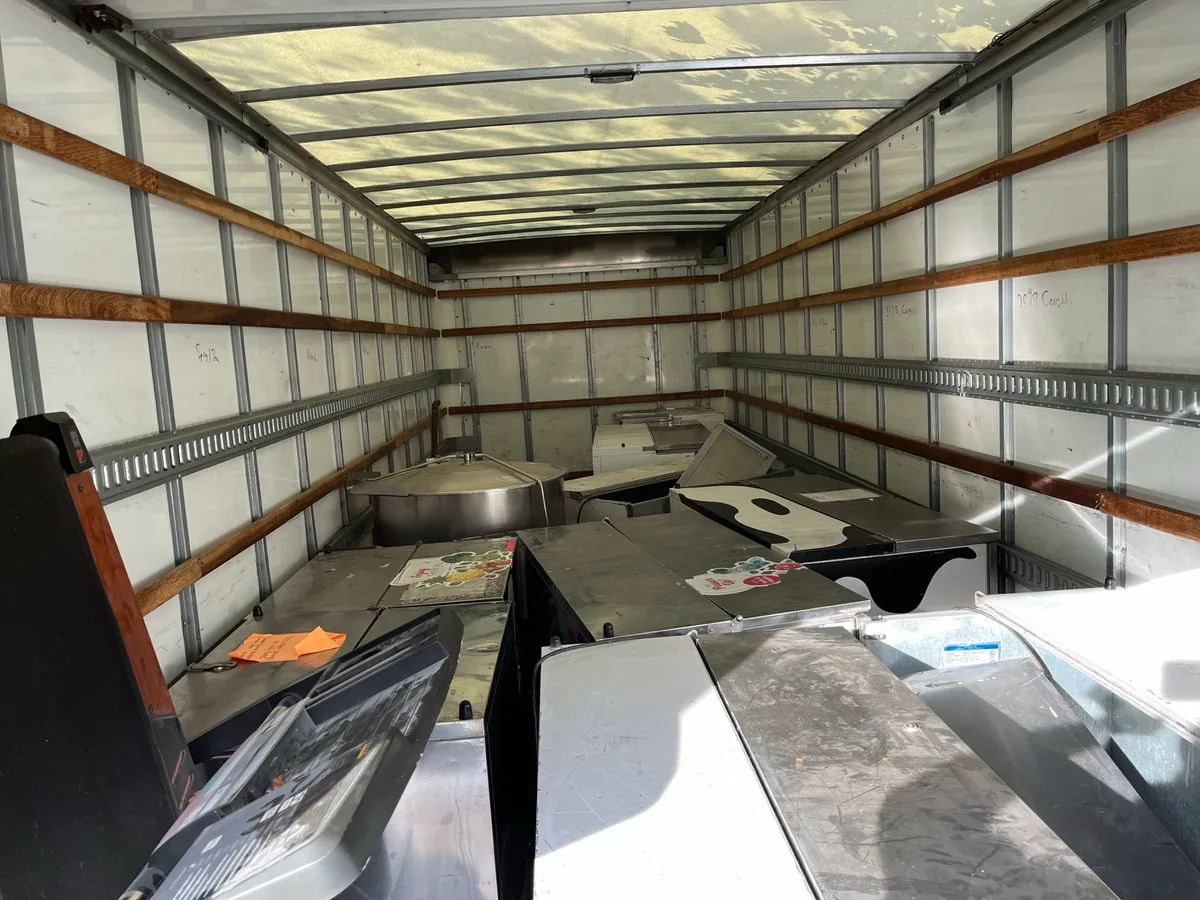
Nothing good, and nothing fast. A steel appliance shell in a landfill just sits there — entombed, taking up space, its metal wasted. And the scale of the problem is bigger than most people think: an estimated 11 to 13 million refrigerated household appliances reach end-of-life in the U.S. every single year (EPA).
The recycling rate for all materials in appliances was 59.8% as of the EPA’s most recent measurement (EPA, 2018). That sounds respectable until you flip it around: about 40% of that material never comes back.
The buried steel is the wasteful part. The hazardous part is everything else inside an appliance:
- Refrigerant. Fridges, freezers, window AC units, and dehumidifiers contain refrigerant that federal law requires to be recovered before the unit is scrapped or landfilled. Venting it is illegal under the Clean Air Act (EPA).
- Insulating foam. There is no federal requirement to recover the blowing agents in refrigerator foam, so when units are shredded or landfilled, those gases are “typically emitted” straight into the atmosphere (EPA).
- Mercury, PCBs, and used oil. Older appliances can contain mercury switches, PCB capacitors, and compressor oil — all of which must be removed under federal rules before disposal (EPA).
Done right, this handling works at scale. In 2019 alone, partners in the EPA’s Responsible Appliance Disposal program processed over 513,000 refrigerators, recycled 96 million pounds of durable materials, and avoided more than 2 million metric tons of CO2-equivalent emissions (EPA RAD, 2019).
Notice what is inside that number. In 2018, the last year the EPA published a full materials breakdown, RAD partners recovered 77 million pounds of steel and other ferrous metal, 5 million pounds of copper, aluminum, and other non-ferrous metal, 20 million pounds of plastic, and 2 million pounds of glass (EPA RAD, 2018). An appliance is not just its steel shell. The plastic liner, the glass shelves, the copper windings in the motor — a responsible teardown recovers all of it, and a landfill buries all of it.
We wrote a full walkthrough of the teardown process in what happens to your old appliance after pickup — freon recovery, metal separation, the works. If you have a fridge or freezer to get rid of, our appliance removal service handles the refrigerant recovery step for you.
Recycle your old appliance the easy way. $11 flat for washers, dryers, stoves, water heaters, and anything mostly metal — set it outside and we handle the rest. See the $11 Pickup List →
Why the $11 Pickup Model Is Built on Recycling
Here’s the honest part, and it matters: Indy Pickup 1111 isn’t a junk hauler that recycles when convenient. Recycling is the business model.
A traditional junk removal company charges $99 to $500+ per appliance because their revenue is the fee — the item itself is a cost they pay to dump. Our math runs the other way. Every washer, water heater, and grill we collect has commodity scrap value, and everything flows back to our family’s yard at 3013 Stanley Avenue on the south side, where the metal is processed and sent back into the supply chain. The $11 covers fuel; the metal is the margin. We explained the full economics in why the $11 pickup exists.
We won’t pretend the $11 fee is charity. It’s a business that only makes money when your appliance actually gets recycled — which means the environmental outcome isn’t a marketing promise you have to trust. It’s the only way we get paid. That alignment is rare in this industry, and frankly we think it’s a better guarantee than any green badge on a website.
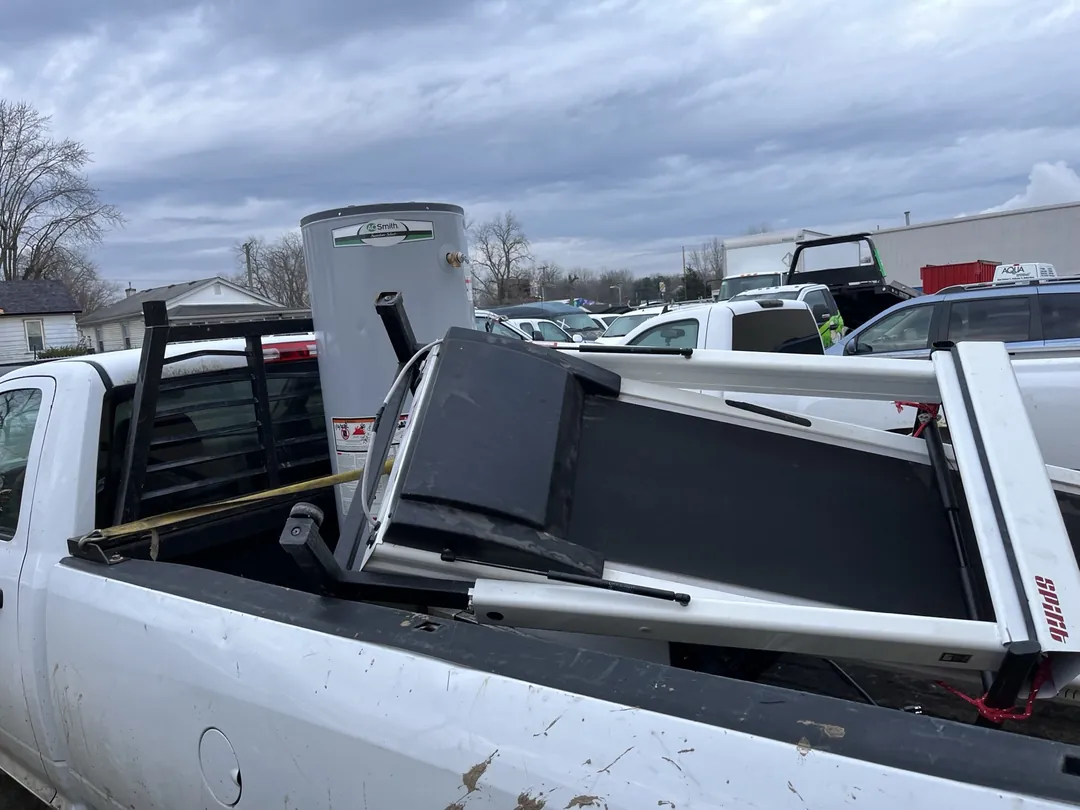
“Local. Reliable. Eco-Friendly.” is our tagline because the recycling loop is local: your appliance is collected by an Indianapolis crew, processed at an Indianapolis yard, and sold as scrap into a supply chain that turns it into new steel. The $11 appliance and scrap metal pickup covers the whole metro.
Appliance Recycling Environmental Impact in Indianapolis, by the Numbers
The Indianapolis-Carmel-Greenwood metro has 869,616 households (U.S. Census Bureau ACS, 2024). Assume a typical home runs at least five major appliances — refrigerator, stove, washer, dryer, water heater — and that each lasts 10 to 15 years. Those two assumptions are ours, a rule of thumb rather than a measured figure.
Run the back-of-envelope math (again, ours, not a government figure): 870,000 households times five appliances, replaced every 10 to 15 years, works out to roughly 290,000 to 435,000 major appliances hitting end-of-life in the Indianapolis metro every year. Every one of them either gets recycled or gets buried.
Indianapolis residents have options — heavy-trash pickup, yard drop-offs, retailer haul-away — and we compared them all in our scrap metal recycling guide for Indianapolis. But options only matter if people use them, and the friction is exactly why so many appliances end up in an alley or a dumpster: no truck, no time, no idea who takes a dead freezer.
That friction is the problem Indy Pickup 1111 was built to remove. Book online or by text, pay $11, set the item outside or in the garage, done — no truck rental, no landfill line. It’s the lowest-effort, lowest-cost way to make sure your appliance actually gets recycled, and 2,173 Google reviews at 4.9 stars say the process holds up. We cover the whole metro, Greenwood to Carmel, Avon to New Palestine, with same-day or next-day service in the core area.
How to Recycle an Old Appliance in Indianapolis
- Check the list. Washers, dryers, stoves, water heaters, and anything mostly metal ride for the flat $11 — the full rundown is on the $11 pickup items page.
- Book and prepay the $11. Call or text (317) 350-1111, or use the online form at indypickup1111.com. During business hours we typically respond within the hour.
- Note the freon surcharge if it applies. Refrigerators, freezers, and AC units carry a $25 refrigerant-recovery surcharge ($36 total) because federal law requires the refrigerant to be recovered before scrapping — that’s the cost of doing it legally.
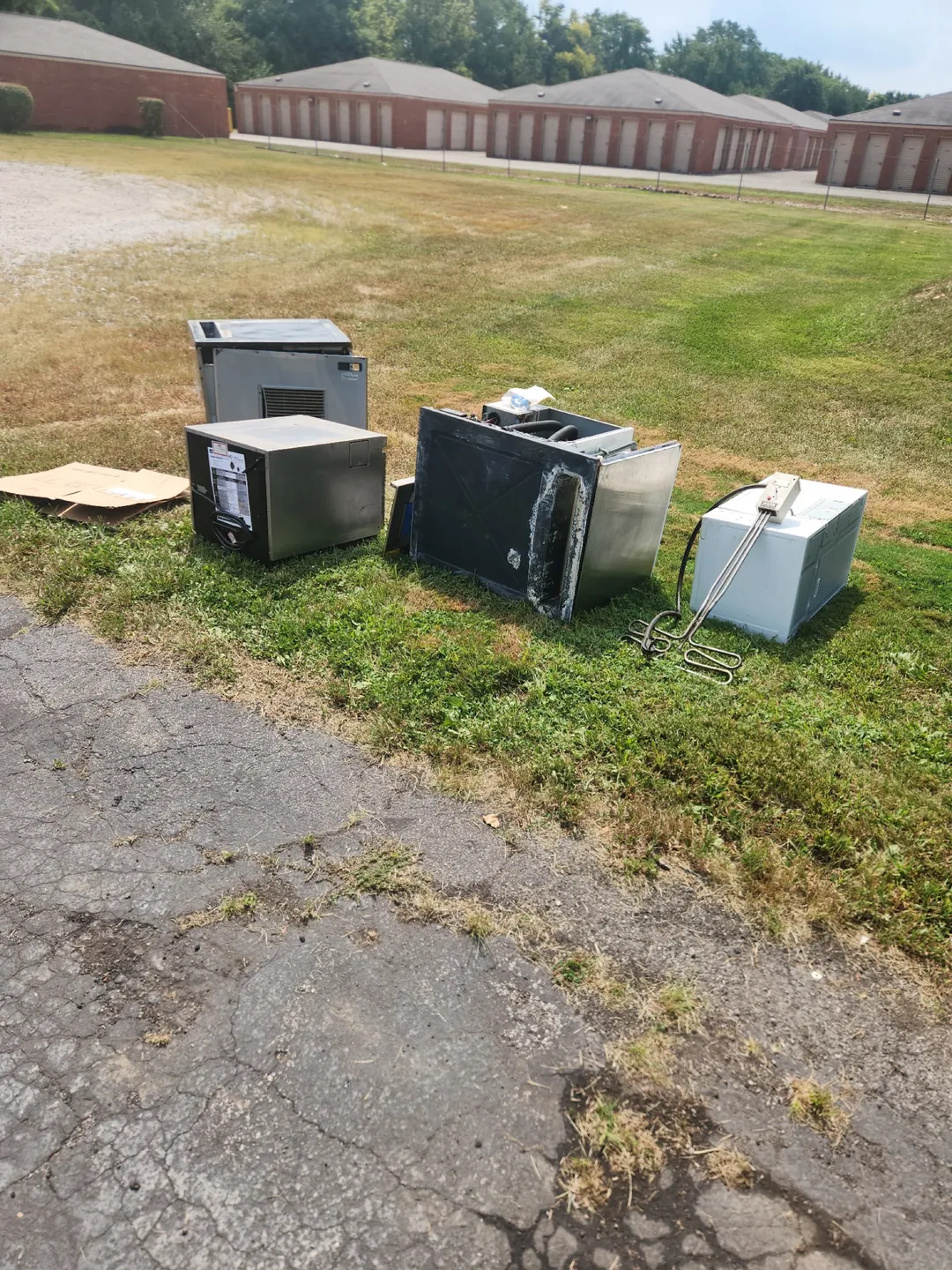
- Set it outside or in the garage. You don’t need to be home. The crew picks it up in the scheduled window, and the metal heads to the yard for processing. See how it works for the full process.
Questions about an odd item or a big cleanout? Reach out and we will quote it within 24 hours, usually much faster.
The biggest recyclable in your driveway is a junk car. Our sister company Cash Car Heroes pays cash for junk cars with free towing — same family, same yard, same recycling loop. Get a Cash Offer →
Frequently Asked Questions
Is appliance recycling good for the environment?
Yes, measurably. Steel made from scrap takes about 59% less energy and produces about 70% less CO2 than steel made from iron ore (worldsteel, 2024), and every ton of scrap saves about 1.4 tons of mined ore (worldsteel, 2021). Globally, the 630 million metric tons of steel recycled each year prevent roughly 950 million metric tons of CO2 emissions (BIR, 2025).
What happens to old appliances in a landfill?
The steel shell does not break down in any useful timeframe — it simply takes up space while the metal goes to waste. Worse, refrigerated appliances can leak refrigerant, and insulating foam releases its blowing agents when units are shredded or crushed without recovery (EPA). Mercury switches and PCB capacitors in older units add contamination risk.
How much energy does recycling steel save?
About 59%. Scrap-based electric arc furnace steel took 9.84 gigajoules per metric ton in 2024 versus 23.88 for ore-based blast furnace steel, per worldsteel’s Sustainability Indicators report (worldsteel, 2024). Steel is also 100% recyclable and can be reprocessed repeatedly without losing quality, which is why it is the most recycled material on the planet (worldsteel, 2025).
Do old refrigerators need special handling?
Yes. Federal law requires the refrigerant in fridges, freezers, and AC units to be recovered before the appliance is scrapped or landfilled — venting it is illegal under the Clean Air Act (EPA). That recovery step is why Indy Pickup 1111 charges a $25 freon surcharge on top of the $11 base, $36 total.
How much of an appliance can actually be recycled?
Most of it. Appliances are predominantly steel, with copper in the motors and wiring and aluminum in various components — all fully recyclable. The EPA measured the recycling rate of all materials in appliances at 59.8% (EPA, 2018), and that gap is mostly units that never reach a recycler at all, not material that cannot be processed.
How do I recycle an appliance in Indianapolis?
The easiest route: book an $11 pickup with Indy Pickup 1111 at indypickup1111.com or by text at (317) 350-1111, then set the appliance outside or in the garage. Same-day and next-day service is typically available across the metro, Greenwood to Carmel. Freon appliances cost $36 total, including the federally required refrigerant recovery.
One appliance won’t fix the climate, and we won’t insist otherwise. But 290,000+ of them reach end-of-life in this metro every year, and whether that steel gets remelted or buried comes down to a thousand small, individual decisions. Ours is easy to make: $11, set it outside, done.
Ready to recycle it the easy way? Book your $11 pickup online at indypickup1111.com or text (317) 350-1111 — same-day and next-day service across the Indianapolis metro.