
After pickup, your old appliance rides straight to a scrap processing yard. Workers pull hazardous parts, recover freon from refrigerators, and sort steel from copper and aluminum. The metal is shredded, separated, and sold to mills that melt it into new products. About 60% of appliance material gets recycled nationally (EPA, 2018 data).
Last updated: August 2026
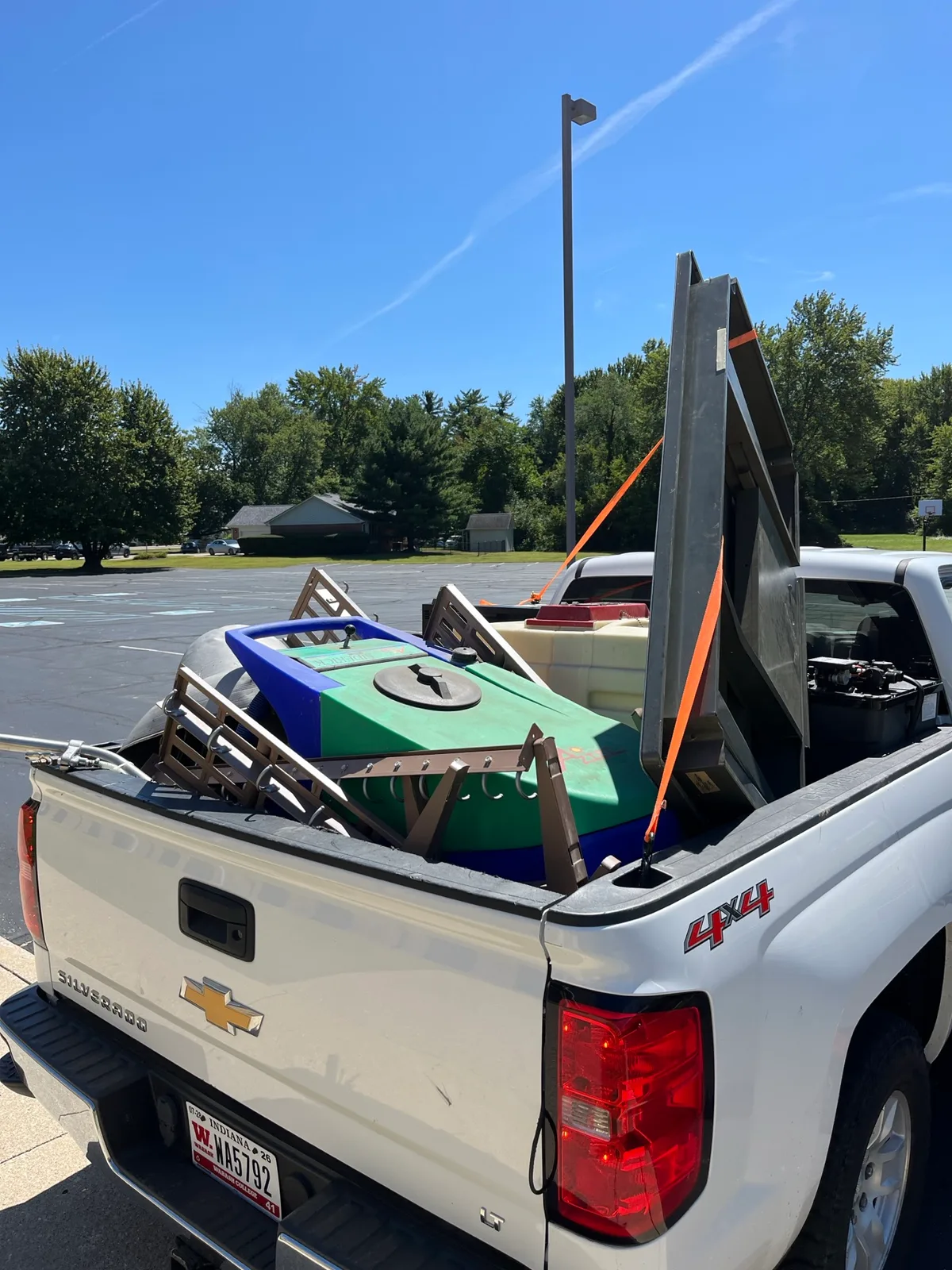
If you have ever wondered what happens to recycled appliances after the truck pulls away, you are not alone — and most companies will not tell you. Junk removal is usually a black box. Your dryer disappears, you get a receipt, and where it actually ends up is anyone’s guess.
Indy Pickup 1111 can answer the question in detail for one simple reason: we own the destination. Our trucks drive every appliance to 3013 Stanley Avenue on the south side of Indianapolis, where our parent company, The New Country Auto Parts LLC, runs the salvage yard that processes it. No middlemen, no mystery. Here is the whole trip, stop by stop.
What Happens to Recycled Appliances After Pickup?
The appliance recycling process has five stops between your driveway and a steel mill:
- The pickup. You book, prepay the $11 base fee, and set the appliance outside or in the garage. You do not need to be home — contactless pickup is available.
- The ride to the yard. Your appliance goes on the truck with the rest of the day’s stops and rides to 3013 Stanley Avenue in Indianapolis.
- Sorting. Items that still work can be donated or resold. Everything else is sorted as scrap: ferrous metal (steel and iron) in one stream, non-ferrous (copper, aluminum, brass) in another.
- Hazard removal. Freon is recovered from refrigerators and AC units, compressor oil is drained, and components like mercury switches are pulled, as federal rules require.
- Processing and sale. The stripped appliance is processed as scrap and sold into metal commodity markets, where mills melt it down for new steel products.
That is the short version. The longer version is more interesting, because it explains both where your washer goes and why the pickup only costs $11 in the first place.
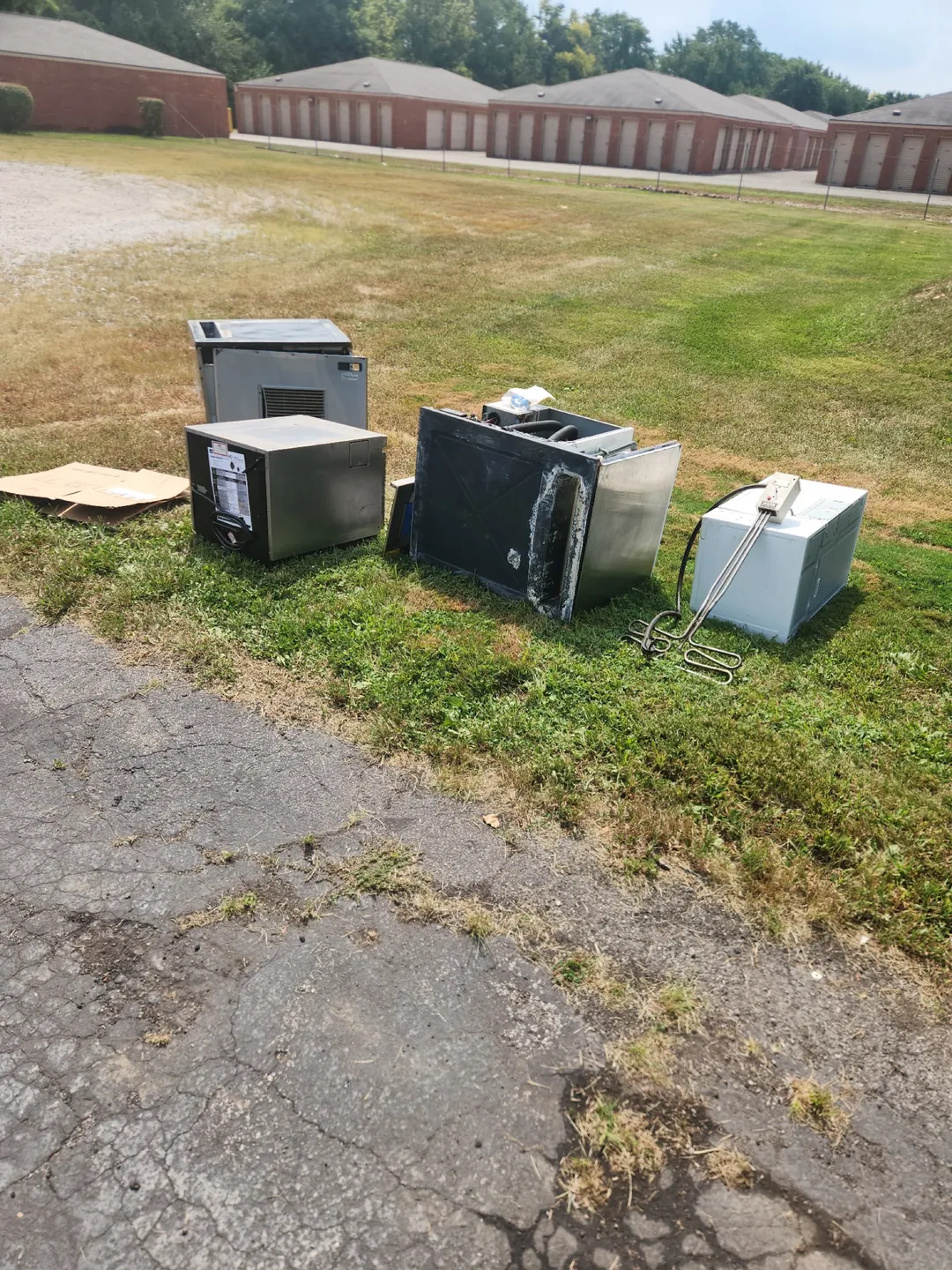
Where Does Your Appliance Go After the Truck Leaves?
Every item we collect ends up at the same address: 3013 Stanley Avenue, Indianapolis, IN 46227. That yard is the hub of a family of local businesses built around one idea — keep metal moving instead of burying it.
The salvage yard is run by The New Country Auto Parts, which strips junk vehicles for reusable parts and processes the leftover metal as scrap. Salvageable auto parts go to The New Country Auto Parts for resale, while Cash Car Heroes handles the junk cars themselves, paying cash and towing them to the same yard. Your old dryer joins that same stream of material.
Appliances that still run get a second look first. Working items are donated or resold when possible — a fridge with life left in it does more good in someone’s kitchen than in a shredder. But most of what we pick up is past saving, and for those items the value is in the metal itself.
This is worth pausing on: the appliance you are getting rid of is not trash. It is raw material. That distinction drives everything else in this story, including the price you pay.
Got a dead appliance taking up space? Indy Pickup 1111 hauls washers, dryers, stoves, and water heaters for a flat $11 — same-day and next-day across the Indianapolis metro. Call or text (317) 350-1111 or book online. Book Your $11 Pickup →
What Happens to a Scrapped Washing Machine?
Take a standard top-load washer as an example. By weight, it is mostly one thing: steel. About 75% of a typical household appliance’s weight is steel, and a top-loading washer carries roughly 94.5 pounds of it (American Iron and Steel Institute).
Here is what that washer is made of, and where each part goes:
| Component | Material | What Happens to It |
|---|---|---|
| Cabinet and frame | Steel | Shredded, magnet-separated, sold to steel mills |
| Drum | Steel or stainless steel | Shredded and recycled with the ferrous stream |
| Motor | Copper windings, steel housing | Copper separated and sold at a premium; it is the most valuable metal in the machine |
| Wiring and connectors | Copper, aluminum | Recovered in the non-ferrous stream |
| Tub, knobs, hoses | Plastic and rubber | The weak spot — much of this still ends up landfilled |
How much steel is in the rest of your kitchen and laundry room? More than most people guess (AISI):
| Appliance | Steel Content |
|---|---|
| Electric range | 106.8 lbs |
| Gas range | 149.4 lbs |
| Side-by-side refrigerator | 152.5 lbs |
| Electric dryer | 107 lbs |
| Top-load washer | 94.5 lbs |
| Room air conditioner | 35.6 lbs |
Once the hazardous parts are out, the scrap metal recycling process is fast. Shredders tear the appliance into fist-sized pieces. Magnets pull the steel out of the stream. Eddy-current separators and hand sorting recover the copper and aluminum. The sorted metal is baled and sold to mills, where it goes straight back into production — American steelmaking furnaces consume nearly 70 million tons of domestic scrap every year (American Iron and Steel Institute).
We will be honest about the limits, though. Nationally, the recycling rate for appliance materials was 59.8%, with about 3.1 million tons of ferrous metal recovered from appliances in a single year while 2.1 million tons went to landfill (EPA, 2018 data). The metal gets recycled at very high rates. Plastic tubs, glass shelves, and foam insulation are the hard part, and the industry has not solved them yet. Anyone who tells you 100% of an appliance gets recycled is selling something.
For a deeper look at how metal grading and pricing works, read our guide to scrap metal recycling in Indianapolis.
How Is Freon Removed From Old Refrigerators?
Refrigerators, freezers, dehumidifiers, and AC units get special treatment, and this is the part of the appliance recycling process most companies skip over entirely.
These appliances contain refrigerant — commonly called freon — plus compressor oil. Venting refrigerant into the air is illegal. Under Section 608 of the Clean Air Act, refrigerant has to be recovered before an appliance reaches final disposal, using recovery equipment that meets EPA performance standards. Separately, federal waste rules require hazardous components — mercury switches, PCBs, and compressor oil — to be pulled and handled under 40 CFR Parts 273, 279, and 761.
The scale of this matters: an estimated 11 to 13 million refrigerated household appliances reach the end of their life in the U.S. every year (EPA). Every one of them holds refrigerant that either gets captured — or leaks.
This is also why freon appliances cost more than $11 to pick up. Recovery takes certified equipment and extra handling time, so those items carry a published surcharge on top of the $11 base fee, scaled to the work involved: $25 for a top-mount fridge, chest freezer, or upright freezer ($36 total), $30 for a side-by-side, French door, or commercial unit ($41), and $15 for a dorm fridge, a dehumidifier, or a window or portable AC ($26). Central AC units and heat pumps carry no surcharge at all. Every one of those numbers is published before you book, not sprung on you at the curb. Full details are in our refrigerator pickup guide.
Old fridge or freezer to get rid of? $36 for a top-mount fridge or freezer, $41 side-by-side, $26 dorm size — the $11 base plus a published freon surcharge, with EPA-compliant refrigerant recovery included. Set it outside, and we handle the rest. Schedule a Freon Appliance Pickup →
Does Recycling Appliances Help the Environment?
Recycled appliance metal does not vanish into a warehouse somewhere. It comes back as things you use.
Robin Wiener, president of the Recycled Materials Association, put it this way on America Recycles Day: “From the coffee cup we are using to the cars we drive and the bridges we cross — recycled materials are a part of virtually everything around us.”
The numbers back her up. About 90% of the steel in U.S. bridges is made with recycled materials, and the average car body contains 25% recycled steel (Recycling Today, 2024). Your old washer may literally be part of the next bridge you drive over. For the full data case — energy saved, CO2 avoided, and what happens when appliances get buried instead — see our guide to the environmental impact of appliance recycling.
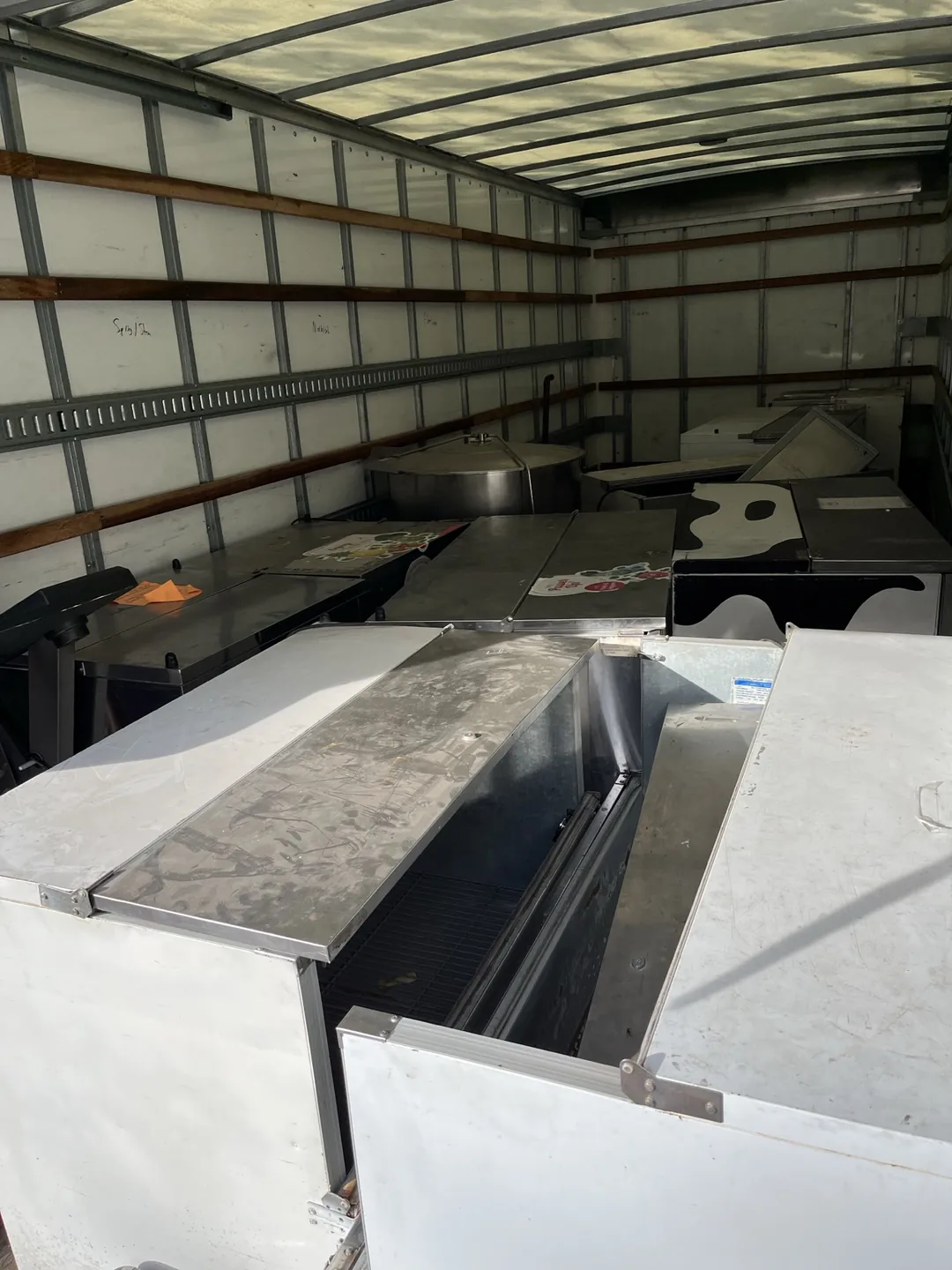
At the local level, the math is simpler. Every appliance we collect keeps 35 to 150-plus pounds of metal out of the local waste stream and puts it back into production. Indy Pickup 1111 recycles tons of metal every year through the Stanley Avenue yard. We are not going to claim we are saving the planet one dryer at a time — but multiplied across a full schedule of stops from Greenwood to Carmel, it adds up to real landfill diversion for central Indiana.
If you are weighing all your disposal options first, our hub guide on how to get rid of old appliances in Indianapolis compares every route, from city pickup to retailer haul-away.
Why Is the Pickup Only $11?
Here is the transparency part most companies will not give you: the reason we can charge $11 while junk removal franchises charge $99 to $500+ for the same appliance is everything you just read.
The metal is the revenue. A junk removal company hauls your dryer away as waste and charges you accordingly. Indy Pickup 1111 collects it as raw material, processes it through our own yard, and earns the scrap value on the back end. The $11 — billed as an Eco & Fuel Recovery Fee — covers fuel and operations after fuel costs climbed more than 35% in a single year. The scrap provides the margin.
That model only works because of the vertically integrated setup at Stanley Avenue: pickup service, salvage yard, and parts resale under one roof. It is also why we are picky about what qualifies — the item has to be mostly metal. Check the full $11 pickup items list to see what qualifies, or read the complete $11 appliance and scrap metal pickup guide.
Does the honest math work on every single stop? No. A light load of thin sheet metal some weeks barely covers the diesel. But across 2,173 Google reviews at a 4.9-star average, the model has proven itself: charge a fair flat fee, recycle what you collect, and people come back. Reviewers routinely mention it is their second or third time calling us.
Frequently Asked Questions
Are old appliances actually recycled?
Mostly, yes. The EPA put the recycling rate for appliance materials at 59.8%, and the steel is recycled at much higher rates than that figure suggests — plastics and foam drag the average down. Indy Pickup 1111 hauls every appliance to its own salvage yard at 3013 Stanley Avenue in Indianapolis, where the metal is sorted, processed, and sold to mills.
What happens to old refrigerators after pickup?
Refrigerators get their freon recovered first, using EPA-standard recovery equipment as federal law requires. Then the compressor oil is drained, hazardous parts are removed, and the steel case — about 152 pounds of metal in a side-by-side model — is shredded and recycled. That extra handling is why fridges carry a freon surcharge on top of the $11 base fee: $25 for a top-mount unit, $30 for a side-by-side.
Is Indy Pickup 1111 eco-friendly?
Recycling is the business model, not a marketing line. Items are recycled or donated when possible, freon is recovered per EPA rules, and tons of metal move through the Indianapolis yard every year instead of a landfill. The service holds 2,173 Google reviews at 4.9 stars, and the eco-fee pricing is published upfront.
Does recycling appliances help the environment?
Yes, measurably. American steelmaking furnaces consume nearly 70 million tons of domestic scrap every year (AISI), about 90% of bridge steel comes from recycled sources, and the average car body is 25% recycled steel (Recycling Today, 2024). Each recycled appliance returns 35 to 150-plus pounds of metal to that supply chain.
Do appliances need to be unplugged before pickup?
Yes. Disconnect the appliance and set it outside or in the garage before your pickup window — items on the road or curb do not qualify. You do not need to be home, since contactless pickup is available. If an item needs to come from inside the house, published inside-removal surcharges apply on top of the $11 base.
Where does Indy Pickup 1111 take old appliances?
Everything goes to 3013 Stanley Avenue on the south side of Indianapolis — the salvage yard operated by parent company The New Country Auto Parts LLC. Metal is sorted into ferrous and non-ferrous streams, processed, and sold into commodity markets. Working items are donated or resold when possible.
How much does appliance pickup cost in Indianapolis?
$11 flat for most metal appliances — washers, dryers, stoves, and water heaters — placed outside or in the garage. Freon appliances add a published surcharge: a top-mount fridge or freezer is $36, a side-by-side is $41, and a dorm fridge or window AC is $26. Typical junk removal companies charge $99 to $500+ for the same job. Book at (317) 350-1111.
Feel good about your $11 pickup. What we collect gets recycled or donated — freon recovered, metal back to the mills, nothing mysterious about it. See how it works, then call or text (317) 350-1111. Book Your Pickup →
Your old appliance had a working life of 10 or 15 years. Its afterlife — as bridge steel, rebar, or the frame of a brand-new washer — can run a lot longer. All it takes to start that trip is setting it outside and booking a stop.