
Copper is the scrap metal worth the most money for homeowners — roughly $3 to $5+ per pound, found in wiring, plumbing pipes, and motors. Brass runs $1.50 to $3 per pound, aluminum $0.50 to $1, and stainless steel $0.25 to $0.75. Plain steel brings only 5 to 10 cents a pound, which is why hauling one appliance rarely pays.
Last updated: August 2026
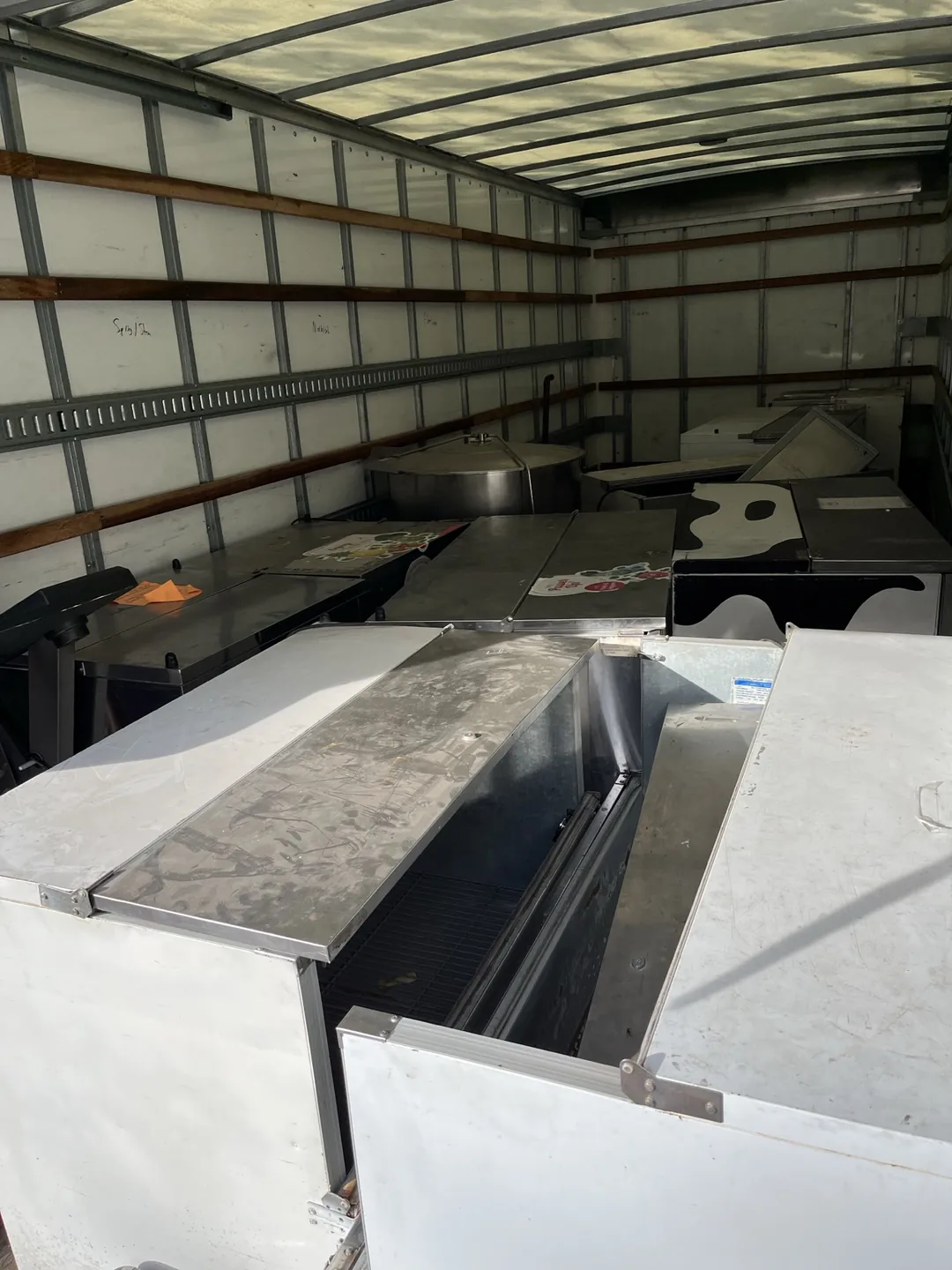
Most houses are hiding more metal value than their owners realize — and most of it gets thrown away anyway. In the US, 54% of discarded ferrous metal and 29% of discarded nonferrous metal ends up in a landfill instead of back in circulation (NIST, 2023). That is real money and real material buried in the ground.
Indy Pickup 1111 is the Home of the $11 Pick Up. We collect scrap metal and appliances across the Indianapolis metro for a flat $11 per stop, and everything we haul gets recycled through our own salvage yard. After thousands of stops — and 2,173 Google reviews at 4.9 stars — we have seen what people scrap, what they keep, and what they mistakenly leave at the curb for the landfill truck.
This guide covers what each metal is actually worth, where it hides in a typical house, and the honest math on when hauling it yourself beats booking a pickup.
What Scrap Metal Is Worth the Most Money?
Scrap metal splits into two families. Ferrous metal (steel, iron) sticks to a magnet and is cheap per pound. Non-ferrous metal (copper, brass, aluminum, stainless) does not stick, and it is where the money is. Here is the value ladder, from top to bottom:
| Metal | Typical Price Per Pound | Where You Find It |
|---|---|---|
| Copper | $3–$5+ | Wiring, plumbing pipes, motors |
| Brass | $1.50–$3 | Faucets, fixtures, keys, valves |
| Aluminum | $0.50–$1 | Siding, gutters, cans, window frames |
| Stainless steel | $0.25–$0.75 | Sinks, appliance drums, cookware |
| Steel / iron | $0.05–$0.10 | Appliances, fencing, shelving, car parts |
Prices follow the commodity markets and move constantly, so treat any chart — ours included — as a snapshot, not a promise. For reference, one New Jersey yard that posts its board publicly was paying $5.35 per pound for #1 copper tubing, $3.20 for plumbing brass, $0.73 for aluminum siding, and $130 per gross ton for light iron — about 6 cents a pound — in August 2026 (Rockaway Recycling, 2026). Indianapolis yards post their own boards, they run lower or higher depending on the week, and none of them are obligated to match anyone else. We track the local numbers — copper, brass, aluminum, and steel, plus which yards buy from the public — in our Indianapolis scrap metal prices guide.
Why does any of this metal hold value at all? Because recycled metal is not waste — it is raw material American manufacturers depend on. According to Robin Wiener, President of the Recycled Materials Association, “From the coffee cup we are using to the cars we drive and the bridges we cross — recycled materials are a part of virtually everything around us” (Recycling Today, 2024).
Copper: The Most Valuable Scrap Metal ($3 to $5+ Per Pound)
Copper is the king of residential scrap. Clean copper pipe and heavy-gauge wire routinely bring $3 to $5+ per pound, and bare bright wire tops the charts at $5.65 at the yard cited above (Rockaway Recycling, 2026). You will find it in old plumbing runs, water heater fittings, thick appliance cords, electric motors, and the coils inside air conditioners. Despite that value, only about 34% of copper in the US actually gets recycled (NIST, 2023). The rest gets buried.
Brass: Faucets, Fixtures, and Keys ($1.50 to $3 Per Pound)
Brass is heavy for its size, which works in your favor at the scale. Old faucets, hose spigots, door hardware, valves, and that jar of orphan keys in the junk drawer are all brass. A box of retired bathroom fixtures can outweigh — and outearn — a whole appliance’s worth of steel.
One caveat, because the top of that range is not automatic: grade matters more with brass than with any other household metal. The yard cited above paid $3.20 a pound for clean plumbing brass but only $0.70 for dirty brass faucets — the kind with chrome plating, plastic cartridges, and steel screws still attached (Rockaway Recycling, 2026). Strip the non-brass parts off and you move up a grade.
Aluminum Scrap Value: Siding, Gutters, and Frames ($0.50 to $1)
Aluminum is everywhere: siding, gutters, storm doors, window frames, lawn chairs, bikes, and cans. It is light, so it takes volume to add up, but a full siding tear-off or a garage’s worth of aluminum extension ladders is real weight. Clean, sorted aluminum earns noticeably more than aluminum mixed with steel screws and plastic.
Stainless Steel: Sinks and Appliance Drums ($0.25 to $0.75)
Stainless sits between aluminum and plain steel. Kitchen sinks, washer drums, commercial shelving, and some cookware are stainless. Here too, the alloy sets the price — non-magnetic 304 stainless brought $0.38 per pound and 316 brought $0.75 at the yard above (Rockaway Recycling, 2026) — and most yards will check it with a magnet in front of you.
Steel and Iron: The 5-to-10-Cent Workhorse
Here is the humbling part: most of the metal in your house is plain steel, worth a nickel to a dime per pound. Washers, dryers, stoves, water heaters, fencing, shelving, swing sets, car parts — all steel. It absolutely should be recycled — all materials in discarded appliances, ferrous metal included, get recycled at a 59.8% rate in the US, though ferrous metal recovered from durable goods overall (appliances, furniture, and tires together) runs only 27.8% (EPA, 2018 data). But a 200-pound washer holds maybe $10 to $20 of metal. Keep that number in mind for the math section below.
What Scrap Metal Is Hiding in Your House?
Our drivers see the same pattern every week: homeowners book a pickup for one appliance, then start walking the property and find a whole load. Here is where the metal hides:
- Basement and utility room: Retired water heaters (steel bodies with copper fittings), old copper pipe from plumbing upgrades, dead sump pumps, furnace parts, and coils of leftover wiring from past projects.
- Kitchen and laundry: The obvious steel appliances, plus stainless sinks, old cookware, small appliances like mixers, toasters, and microwaves.
- Garage: Car parts, brake rotors, old batteries, dead lawn mowers, bikes, power tools, metal shelving, and the “I might fix it someday” pile.
- Outside: Aluminum siding and gutters left from a re-side, chain-link fencing, metal doors, swing sets, trampoline frames, grills, and brass hose spigots.
- Walls and renovations: If you have remodeled, the copper pipe and wiring that came out is often still sitting in a bucket somewhere. That bucket is the most valuable thing on this list.
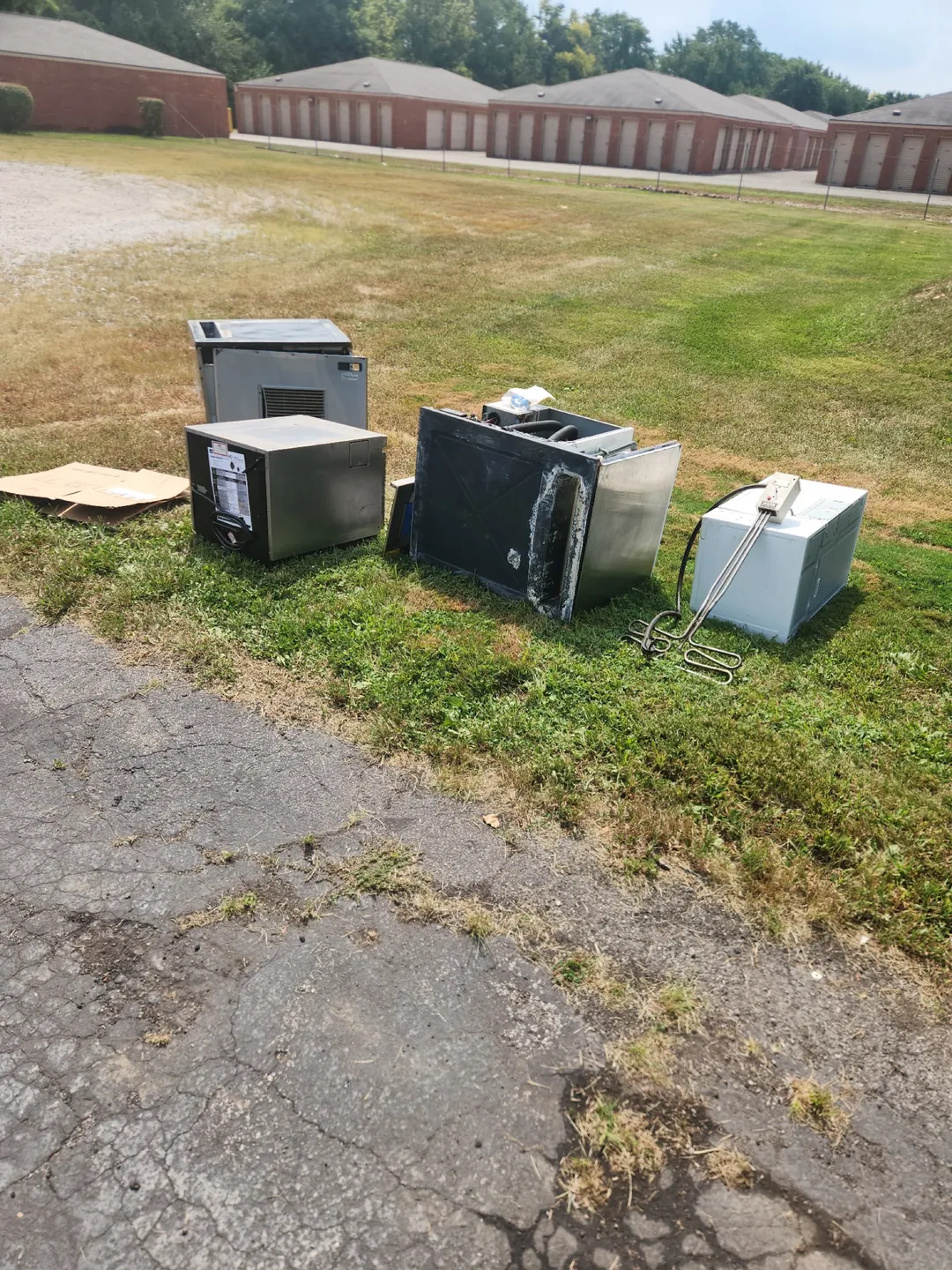
Not sure whether something counts as scrap? The rule of thumb we use: if the majority of the item’s weight is metal, it qualifies. Our complete guide to what qualifies for $11 pickup walks through the full list, item by item.
Found a pile while reading this? Set it outside or in the garage and we will haul it all for one flat $11 stop. Book your $11 pickup →
The $11 Math: When Hauling Your Own Scrap Makes Sense (And When It Doesn’t)
Here is the honest version, because both paths are legitimate. Scrapping your own metal means loading it, driving to a yard, waiting at the scale, and unloading — call it two-plus hours and a gallon or two of gas for most trips. Whether that pays depends entirely on what you are hauling:
| What You Have | Rough Value at the Yard | The Smart Move |
|---|---|---|
| 500+ lbs of copper pipe and wire | $1,500+ | Haul it yourself — that is a paycheck |
| A siding tear-off (aluminum, bulk weight) | $100–$300+ | Haul it if you have the truck and time |
| A washer and some old pipe | $15–$30 | $11 pickup — the trip costs more than the metal |
| One refrigerator | $10–$25 in steel, minus freon handling | $11 + $25 freon surcharge pickup — skip the hassle |
| Mixed garage pile, mostly steel | $20–$50 | $11 pickup — one stop, no loading |
Honestly, for most households the math is not close. If you are sitting on a renovation’s worth of copper or half a ton of clean aluminum, go get paid — we will cheerfully lose that comparison. But if your pile is a dead appliance, some fencing, and a mower (in other words, mostly 6-cent steel), the scrap check would not cover your gas and your Saturday. That is the exact situation the $11 Pick Up exists for: Indy Pickup 1111 charges $11 flat per stop for scrap metal and appliances left outside or in the garage, while typical junk removal companies charge $99 to $500+ for the same haul. Our $11 appliance and scrap metal pickup guide breaks down the model in full.
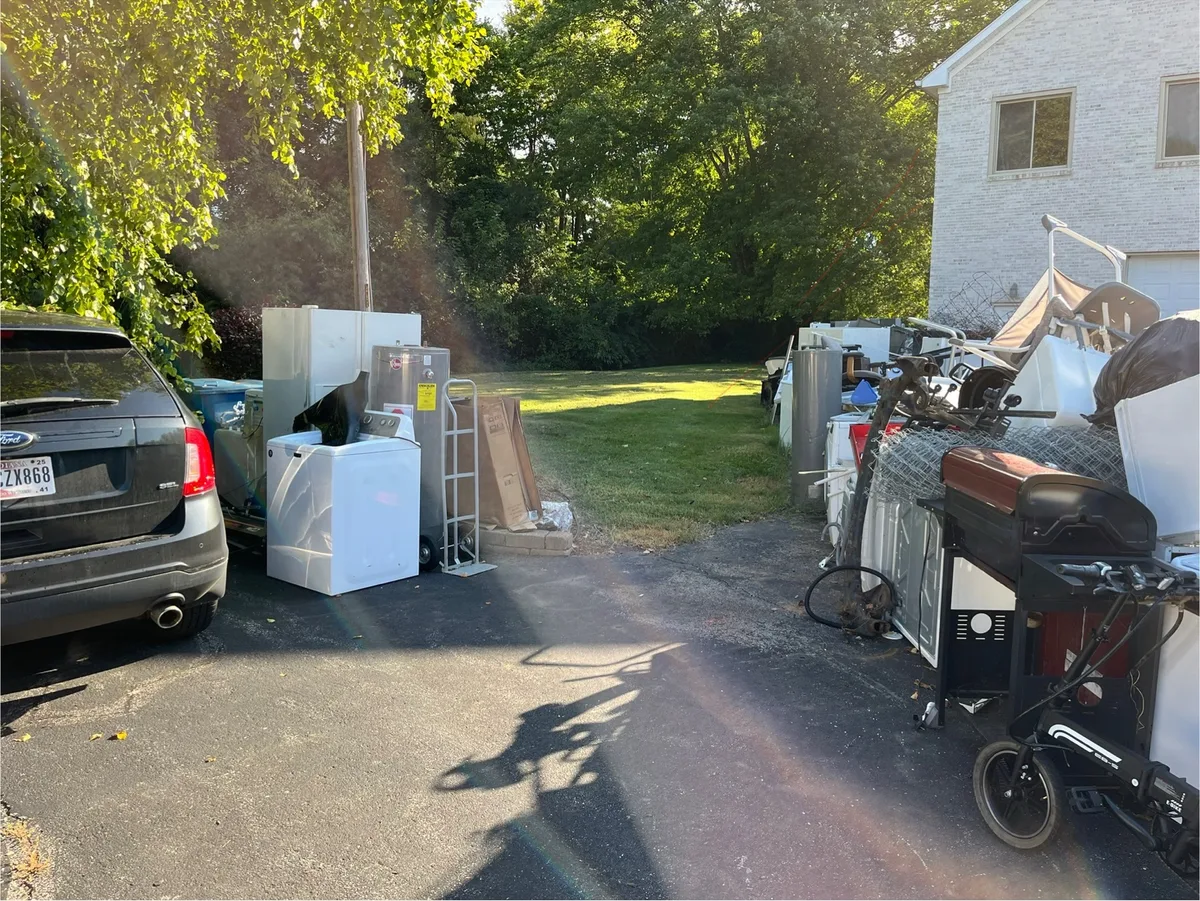
How Do You Get More Money for Scrap Metal?
If you do decide to haul a load yourself, five habits separate the people who get paid well from the people who get paid the mixed-load minimum:
- Run the magnet test. If a magnet sticks, it is ferrous (cheap). If it does not, it is non-ferrous (worth sorting out). A fridge magnet is all you need.
- Separate metals by type. Copper in one bucket, brass in another, aluminum in a third. Yards pay mixed loads at the lowest grade in the pile.
- Strip the easy attachments. A brass valve on a steel pipe gets paid as steel unless you unscrew it. Two minutes with a wrench can multiply the price of a piece.
- Do not hand-strip small wire. Insulated copper wire still sells around $2 per pound as-is (Rockaway Recycling, 2026). Stripping it bare pays more per pound, but for a grocery bag of cords the hours are not worth it. Only thick-gauge wire in volume justifies stripping.
- Check the board before you drive. Prices move weekly. Most yards post prices online or will quote over the phone, so you never have to guess at the scale.
We will admit the limits of our own advice here: we are not a walk-up scrap yard, and we do not pay by the pound. What we know comes from collecting and recycling tons of metal a year through the salvage yard side of the business. For a deeper look at how metal recycling works locally, read our scrap metal recycling Indianapolis guide.
Selling Scrap in Indianapolis: Haul It or Book the $11 Pickup?
Indianapolis has plenty of yards that will weigh your truck and cut you a check, and if your load justifies the trip, that is the right call. For everything else, there is the pickup option:
- Flat $11 per stop for scrap metal and appliances — washers, dryers, stoves, water heaters, mowers, grills, fencing, car parts, and dozens of other items. Specialty items carry small published surcharges on top of the $11 — freon appliances, TVs, furniture, and a few odd ones like microwaves and dishwashers that are more plastic than metal; see our paid services pricing.
- No loading, no lines. Items just need to be outside or in the garage. You do not even need to be home — here is how it works.
- Fast. Same-day and next-day service is typical in the core area, from Greenwood to Carmel, Avon to New Palestine. Check the full service area.
- Actually recycled. Everything flows through our own Indianapolis salvage yard, not a landfill. Licensed, bonded, and insured.
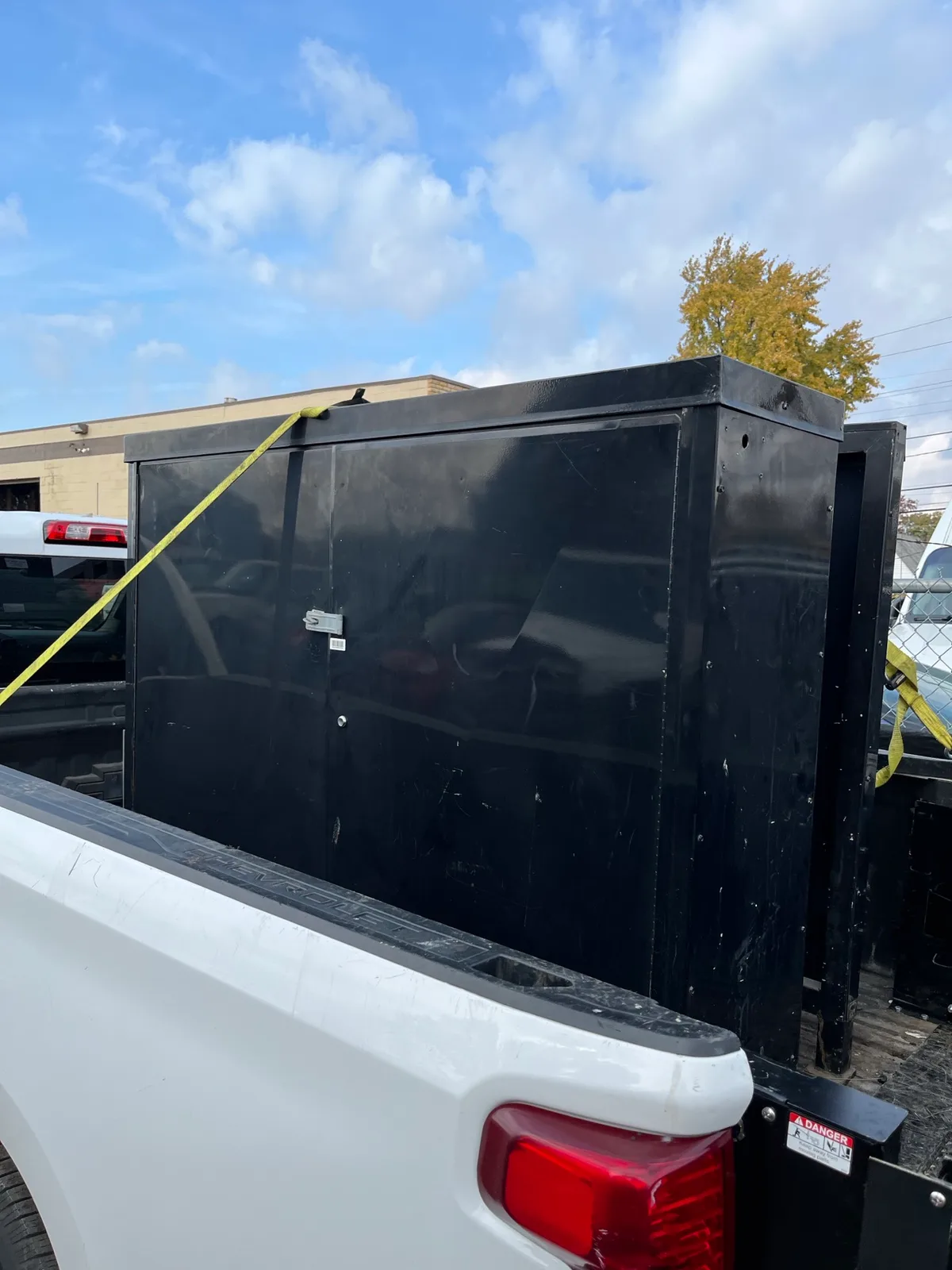
One more scenario worth knowing: if the “scrap metal” in your driveway is an entire vehicle, that is a different (and better-paying) transaction. Our sister company Cash Car Heroes pays cash for junk cars and includes free towing.
Metal pile, meet $11. Book online or text a photo of your items to (317) 350-1111 and we will confirm your pickup, usually within the hour during business hours. Schedule my pickup →
Frequently Asked Questions
What is the most valuable scrap metal?
Copper is the most valuable scrap metal commonly found in homes, worth roughly $3 to $5+ per pound depending on grade and market — bare bright wire reached $5.65 per pound in August 2026 (Rockaway Recycling). It shows up in wiring, plumbing pipe, motors, and AC coils. Precious metals like platinum are worth more but rarely appear in household scrap.
Is it worth scrapping a washer or dryer yourself?
Usually not. A washer or dryer is mostly plain steel, worth 5 to 10 cents per pound — roughly $10 to $20 of metal in a 200-pound machine. After gas, loading, and scale time, most people net almost nothing. That is why Indy Pickup 1111 hauls washers and dryers from your garage or driveway for a flat $11.
How much is a junk refrigerator worth in scrap?
A refrigerator holds roughly $10 to $25 worth of steel at typical prices, but the refrigerant complicates things: freon must be legally recovered before the metal is processed, and many yards will not accept a fridge with the sealed system intact. Indy Pickup 1111 picks up refrigerators for the $11 base fee plus a $25 freon surcharge — $36 total.
Should I strip copper wire before scrapping it?
For small household amounts, no. Insulated copper wire sold for about $2 per pound as-is in 2026, while stripped bare bright brought $5.65 (Rockaway Recycling). The higher rate sounds tempting, but hand-stripping a bag of appliance cords takes hours for a few extra dollars. Stripping only pays on thick-gauge wire in real volume.
What household metals are worth the most money after copper?
Brass is the runner-up at roughly $1.50 to $3 per pound — faucets, valves, hose spigots, keys, and door hardware. Aluminum follows at $0.50 to $1 per pound in siding, gutters, window frames, and lawn furniture, then stainless steel at $0.25 to $0.75. Sorting these out of a steel pile is where most of a load’s value comes from.
Do I have to haul scrap metal myself in Indianapolis?
No. Indy Pickup 1111 collects scrap metal and appliances anywhere from Greenwood to Carmel and Avon to New Palestine for a flat $11 per stop, with same-day or next-day service typical in the core area. Set items outside or in the garage, book online or text (317) 350-1111, and the metal gets recycled — no truck, no scale line.
What to Do With the Metal You Just Found
Walk the house with the value ladder in mind: copper and brass in a bucket for the yard if you have real weight, everything else in a pile for pickup. Either way, the worst outcome is the one most Americans choose by default — over half of discarded ferrous metal goes to a landfill (NIST, 2023) when every pound of it had somewhere better to be.
Don't feel like hauling? We'll pick it all up for $11. Indy Pickup 1111 -- Home of the $11 Pick Up. 2,173 Google reviews, 4.9 stars, and your metal never touches a landfill. Book my $11 pickup →